
I read State of AI Design 2026 this week, the second annual report from Designer Fund and Foundation Capital. The line that stayed with me was simple: in 2025, designers were experimenting with AI; in 2026, they're rebuilding around it.
Most of the findings are familiar if you've been close to product work this year. Toolstacks have doubled. Designers are shipping AI-generated code. Roles are blurring. Designers do PM work, PM work touches engineering, engineering touches design.
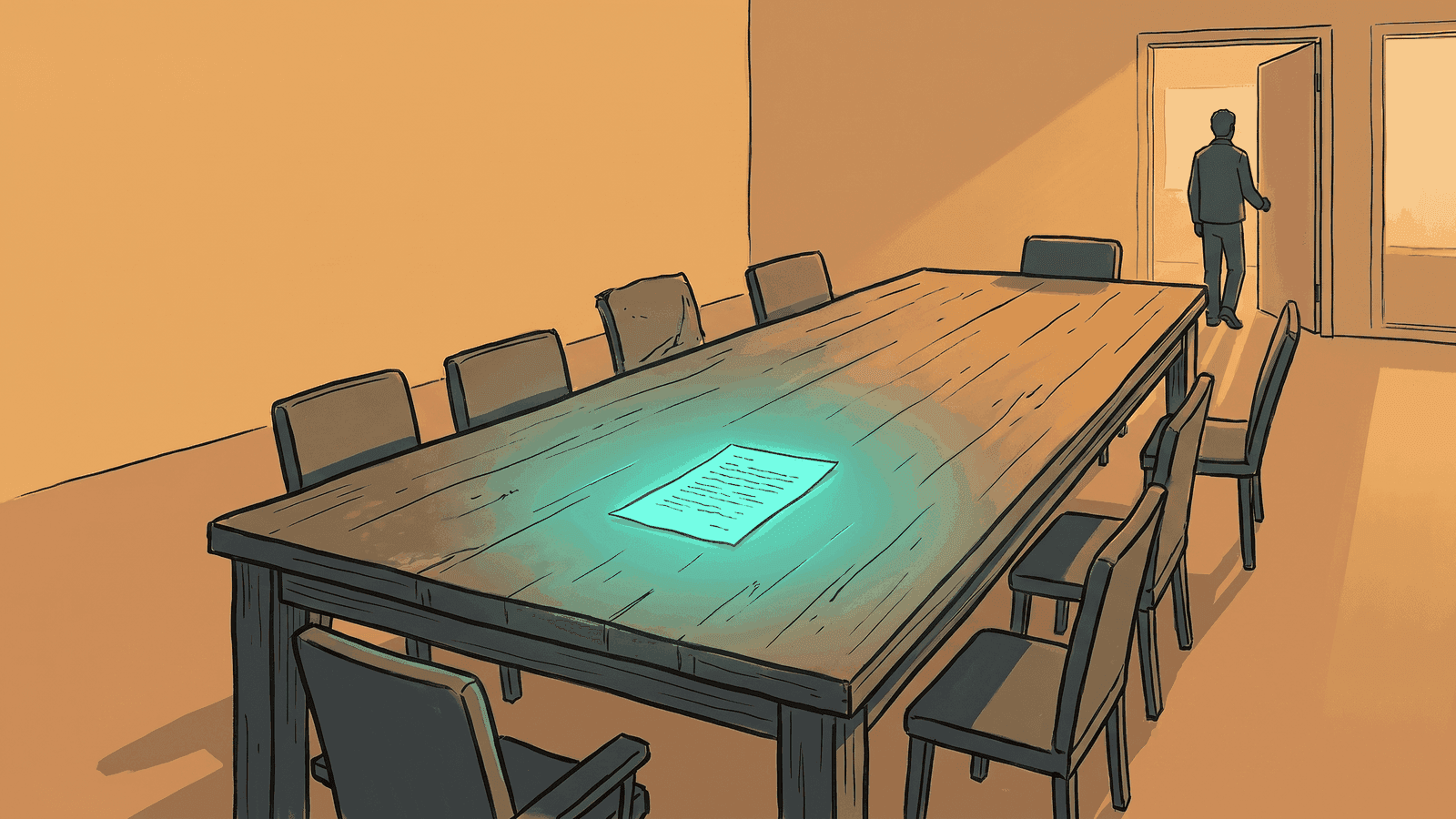
One phrase stuck with me more than the rest: judgment preservation. The worry that designing with AI instead of with teammates erodes something hard to name. Call it taste, call it craft, call it the thing experienced designers do when they look at a screen and say no, not that.
The report names the worry. It doesn't really say what to do about it.
The reflex answer is to keep judgment close. Keep designers in the loop. Don't let the tools decide. I think that's right as far as it goes, but it treats judgment as a personal property, something that lives in someone's head and gets dull when they stop using it.
Some of judgment works that way. The intuitive, in-the-moment part. But most of what we call good judgment on a product team isn't that. It's the accumulated set of reasons: the thing we decided about onboarding two quarters ago, the edge case we hit last month, the constraint we've agreed not to break. That kind of judgment doesn't really live in heads. It lives in the work, or it disappears.
When it lives in heads, what happens is pretty mundane. Someone new picks up the project. They make a change. The change is reasonable on its face but undoes something the team had decided not to do, for a reason nobody wrote down. By the time anyone notices, it's already shipped.
This isn't a new problem. It's just become more obvious. When execution is slow, you have time to catch it in review. When it's fast, you don't. AI in the loop is making it fast.
The role-blur finding is the other thing I keep thinking about. Designers doing PM work, PMs doing engineering work, engineers doing design. I don't think the answer is to put the roles back. The roles aren't coming back. What's left when the titles blur is just builders. People making products with AI as part of the workflow.
Builders don't need another tool. The report shows tools have already doubled. What they need is a place where the thinking lives. Not a Figma file, not a Linear ticket, not a brief in a Notion doc that nobody updates. Something that holds what we're trying to do and why, with the evidence next to it, in a form the next person picking up the work can read and act on without re-running last month's debate.
That layer mostly doesn't exist yet. Most teams skip it. They go straight from rough idea to ticket to implementation, and trust that judgment will be applied somewhere along the way.
For a long time, that trust was reasonable. The people picking up the work had been around for the conversations. Now more of the pickup is happening by people, and by agents, who weren't.
So the next chapter of this report probably has to be about that layer. Not the toolstack. Not craft, exactly. The medium where the thinking gets written down so it can outlive the meeting it came from.
Maybe most of what good product work has always been is just this: writing down why, in a form the next person can use.