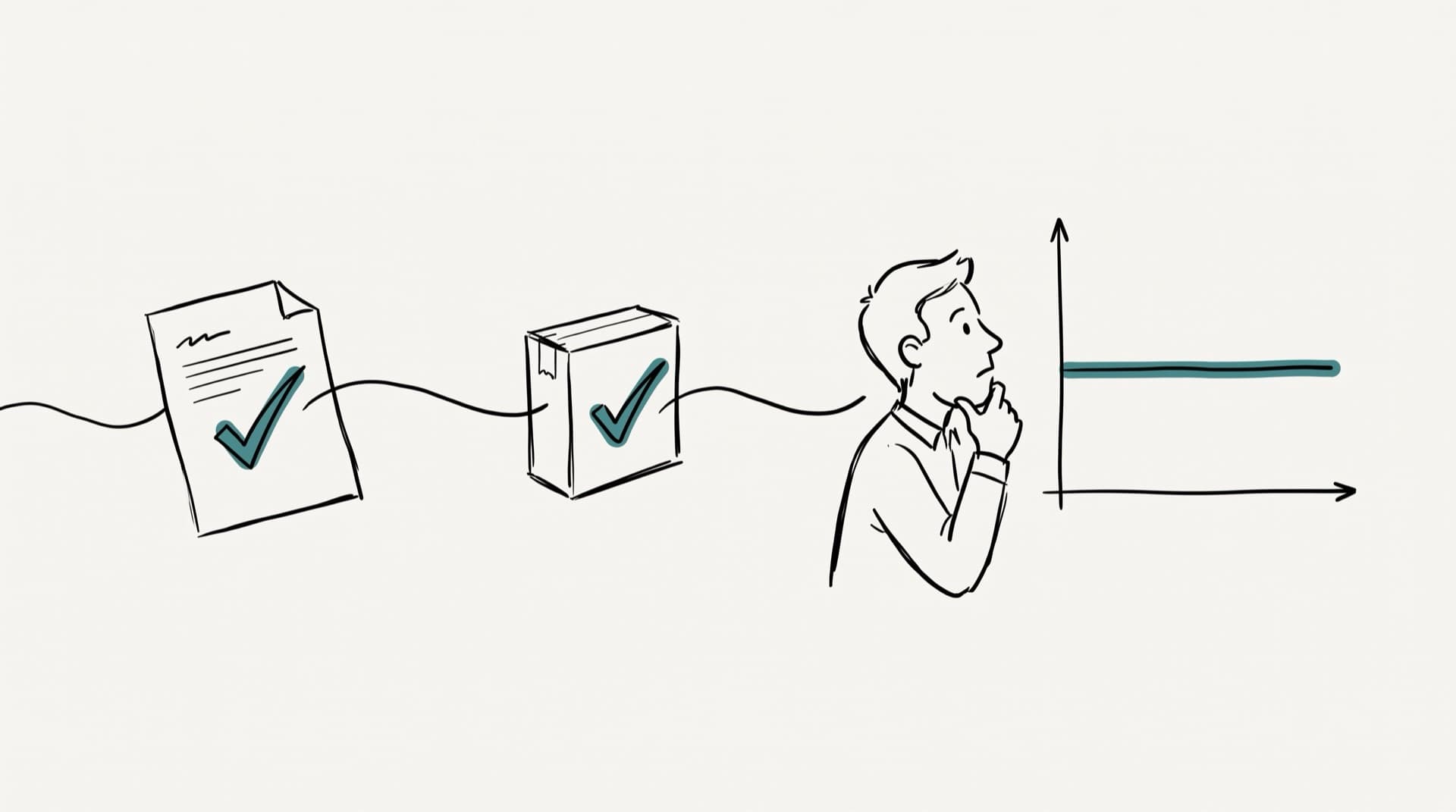
For a long time, research and design lived in their own artifacts. A research deck for the readout. A Figma file for the build. Both were attempts to carry context across a handoff that ate a lot of meaning on the way through.
You probably know the feeling: you watched a user struggle with something specific, you named the pattern in a slide, you handed it off, and the thing that shipped was almost the thing — adjacent to your point, but not quite on it. Not because anyone was careless. Because the artifact you wrote in wasn't the artifact the build happened against.
That gap is what's changing.
What changes
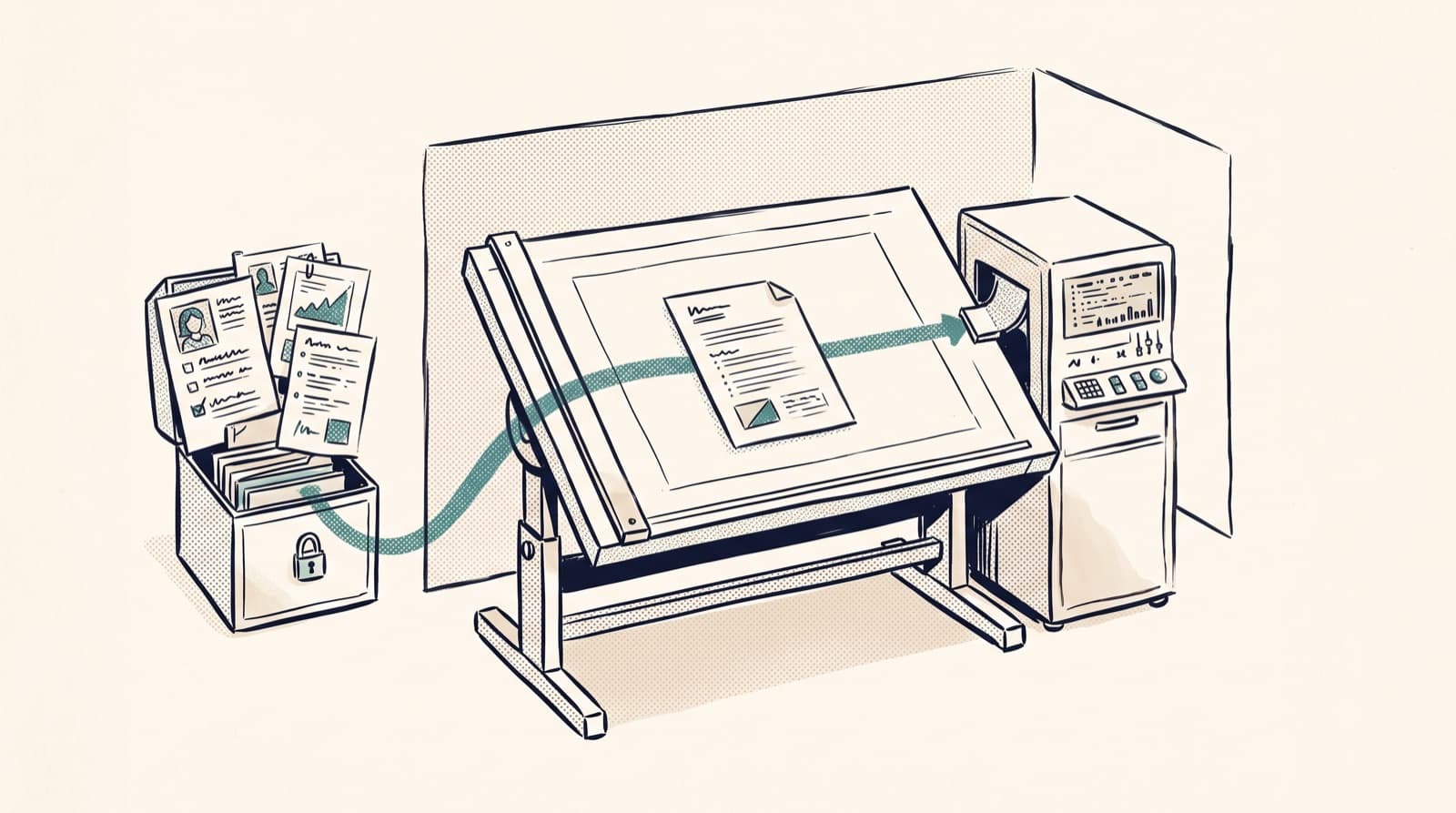
In Pathmode, research is not a presentation. Friction logs, observation notes, user quotes, and recorded sessions become first-class evidence in the connected workspace. They stay outside Git, where private customer material belongs, while repo-safe references preserve which judgment each source supports.
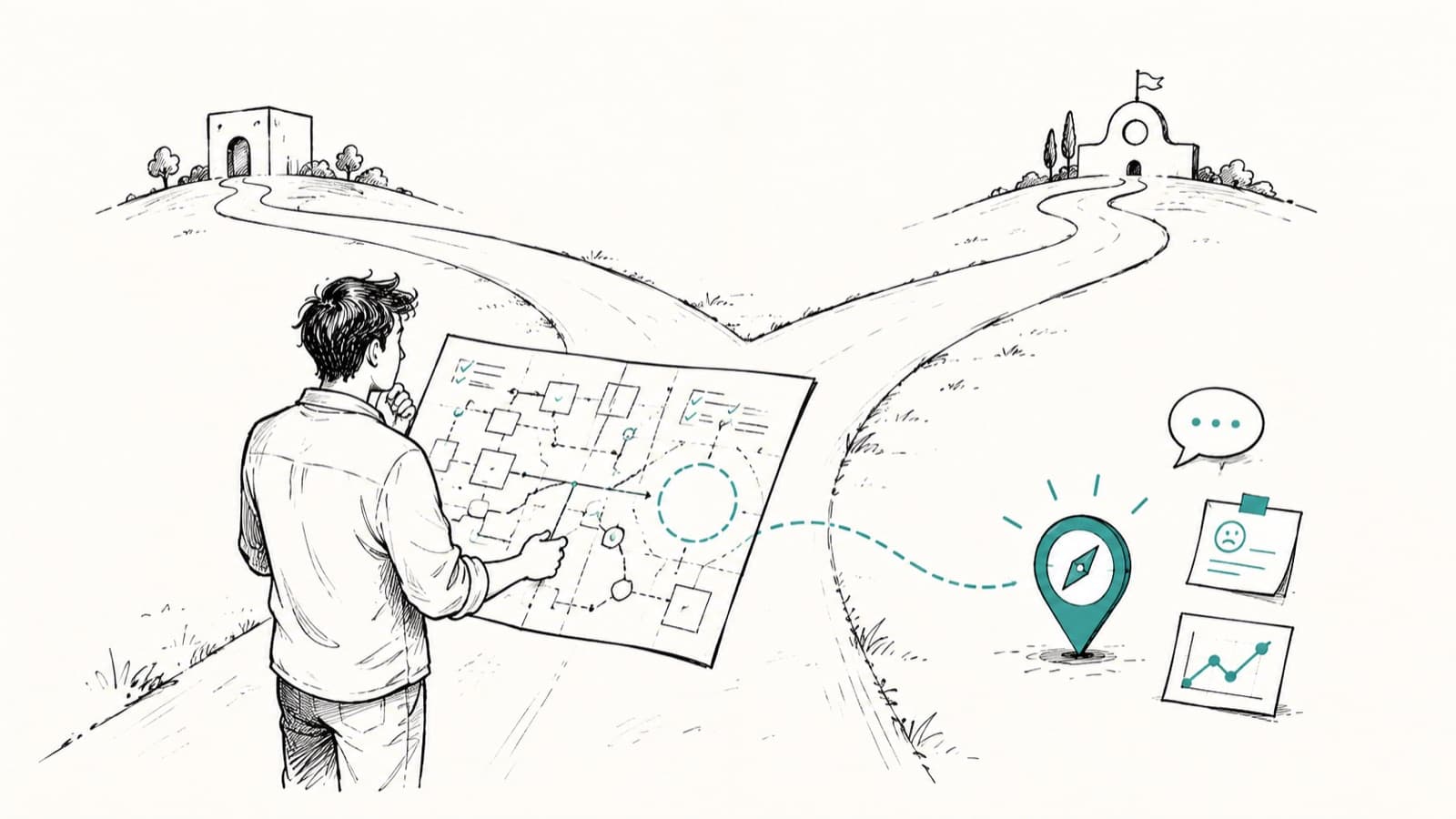
The canonical product decision lives separately in the repository's intent.md. When you see that an outcome, constraint, or edge case no longer reflects the evidence, you do not have to operate Git or ask someone to copy your note into a prompt. You submit a structured change request in Pathmode against the exact current repository revision.
The repository operator's coding agent applies the request to intent.md. Pathmode derives the exact before-and-after diff and clears any verdict attached to the previous material revision. You can verify that the edge case or outcome survived the move into the canonical file. The explicitly responsible human—not the researcher role by default—then authorizes or rejects that exact revision.
A concrete example
A researcher watches three users in a row hesitate before bulk-deleting old projects. Two of them undo immediately. One asks aloud: "is there a way to get this back?" The pattern is small but real.
The old shape: it shows up as a bullet on slide 14 of a deck. Maybe it becomes a Jira ticket. Maybe not. The bulk-delete feature ships without it. Three months later, support tickets confirm what you already saw.
The new shape: the observation enters Pathmode as private evidence the same day. When an adopted intent.md proposes irreversible deletion, the researcher requests a new edge case: when a user deletes projects in bulk, they can restore them for 30 days. The request carries the reason and exact base revision, but not the private session recording.
The repository agent applies the request. Pathmode shows the server-derived diff. The researcher checks that the expected behavior reflects what they observed; engineering checks that the request is coherent and feasible; the responsible product manager authorizes the resulting revision. Pathmode passes that signed-in verdict to the implementation agent.
The thing that changed is not research rigor. It is that the research reaches the repository decision without leaking private evidence or depending on somebody remembering the slide.
What you stop doing
Watching the AI ship a feature that misses the point by a small but unmistakable margin. Re-explaining the same insight at three different review meetings. Asking someone with Git access to translate a precise observation into an unstructured prompt. Wondering whether the canonical file contains what you actually requested.
What's left
User reality. Taste. The judgment about what is right that does not compress into a checklist and should not. Your responsibility is to make the evidence and intended behavior precise, then inspect whether that judgment survived the repository change. Authorization remains with the person explicitly accountable for the product decision.
Where this falls apart
Evidence-anchored specs aren't a substitute for direct contact with users. The most important thing a researcher does — sitting with someone, watching their face, asking the next question — is still, and probably always, the thing. Pathmode is what happens after you saw it. It doesn't replace seeing.
For everything downstream of the session, Pathmode connects what you noticed to the structured request, the intent.md revision that received it, and the human verdict that lets the coding agent proceed.